1. Market Heatmaps and Watchlists Make Asset Discovery Easier
Identifying investment opportunities is one of the first challenges for investors.
Market movements can involve hundreds of assets across different sectors, making it difficult to monitor everything simultaneously.
Walt highlights several tools designed to simplify this process.
Market Heatmap
A market heatmap provides a visual overview of asset performance, helping users identify which markets and instruments are moving.
Instead of checking individual assets separately, investors can use a broader market view to understand where price movements are concentrated.
Watchlists
Users can keep selected assets in a Watchlist on the application home screen.
This makes it easier to follow preferred cryptocurrencies and other supported instruments without repeatedly searching for them.
AI Market Analysis
Walt also supports AI agents that users can ask about market developments.
These agents can help users explore market activity and understand what is happening across selected assets.
AI-generated analysis should still be checked against reliable market information, as automated systems can produce inaccurate or incomplete conclusions.
2. Tokenized Stocks and Funds Expand Investment Opportunities
Another important development is the integration of tokenized traditional financial assets into cryptocurrency-focused applications.
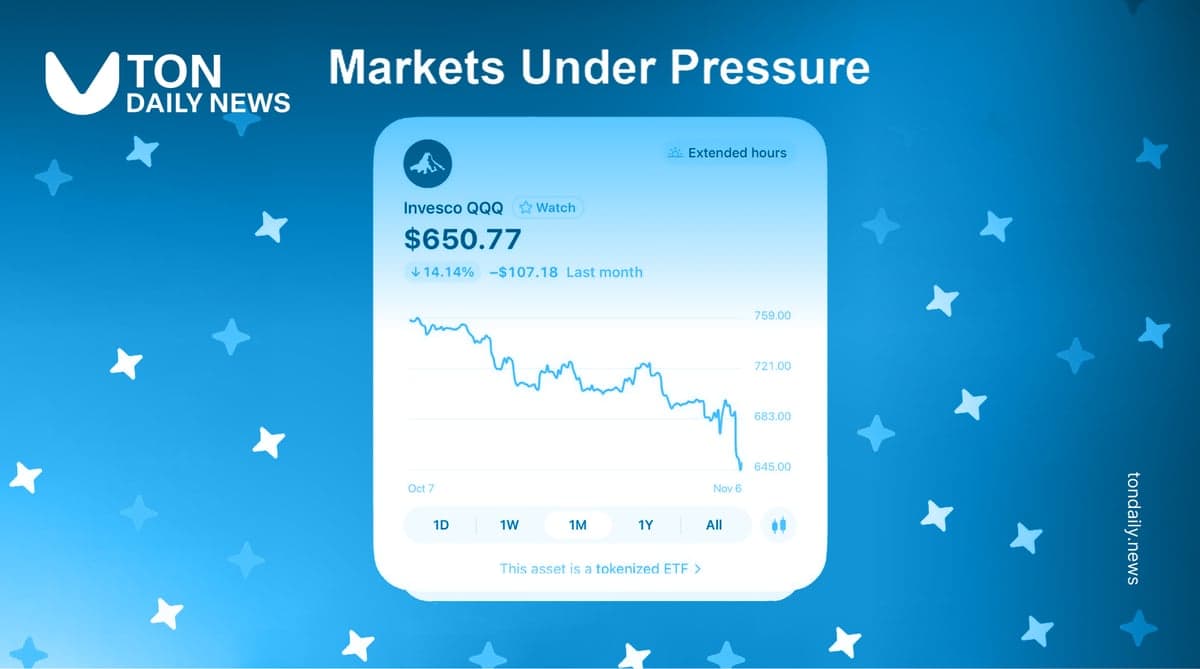
Walt highlights tokenized US stocks and funds as part of its expanding investment offering.
Tokenized assets are digital instruments designed to provide exposure linked to the value of traditional financial products.
They can give eligible users access to selected market instruments through a digital platform.
Some Assets Support 24/7 Trading
According to Walt's announcement, some tokenized stocks and funds are available for trading around the clock.
This can provide greater flexibility compared with conventional stock exchanges, which operate according to specific market hours.
However, 24/7 availability does not necessarily mean continuous liquidity or identical pricing conditions.
Trading hours and product availability can vary between instruments.
Limit Orders for Planned Purchases
Investors can also use limit orders to plan purchases in advance.
A limit order allows a user to specify the price at which they want to buy an asset.
The order can execute when the market reaches the selected price, provided sufficient liquidity is available.
This gives investors more control over their intended entry price compared with placing an immediate market order.
3. Take-Profit and Stop-Loss Tools Support Position Management
Identifying an investment opportunity is only one part of the trading process.
Managing an existing position is equally important.
Walt highlights take-profit and stop-loss orders as tools users can apply to assets they have purchased.
Take-profit orders allow traders to specify a price level at which they want to close a position after a favorable price movement.
Stop-loss orders allow traders to define a price level intended to limit losses if the market moves against their position.
These tools can help users establish trading plans before market conditions change.
However, neither order type guarantees execution at the exact requested price. Market gaps, liquidity conditions and execution rules can affect the final result.
Early Access to Tokenized IPO Stocks
Walt also mentions an option for users to apply in advance for tokenized stocks associated with companies preparing for an initial public offering.
This creates an additional way for interested users to explore potential investment opportunities before a company becomes publicly traded.
The availability, eligibility requirements and allocation process may differ between offerings.
An application for early access should not be interpreted as a guaranteed allocation or ownership of the underlying company's shares.
4. More Than 100 Perpetual Futures Contracts
Perpetual futures are another major part of the platform's trading ecosystem.
Unlike conventional spot purchases, perpetual futures allow traders to take positions based on expected price movements without necessarily owning the underlying asset.
Walt says its platform now offers more than 100 perpetual futures contracts covering several financial markets.
These include:
Cryptocurrencies
US stocks
Stock market indices
Currency pairs
Bonds
Precious metals
Oil
Trading Both Rising and Falling Markets
Perpetual futures allow traders to open long or short positions.
A long position generally benefits when the contract price rises.
A short position generally benefits when the contract price falls.
This gives traders opportunities to express views on both upward and downward market movements.
However, perpetual futures are derivatives and can involve leverage, funding payments and liquidation risk.
Users should understand the contract specifications and margin requirements before opening positions.
5. AI Agents Bring More Trading Tools Into One Interface
Artificial intelligence is becoming an increasingly visible part of financial technology.
Walt highlights AI agents as tools that can assist users with different aspects of perpetual futures trading and portfolio monitoring.
According to the announcement, users can interact with an AI agent to:
Set up trades based on a selected risk level.
Adjust a stop-loss through a message.
Review total risk across multiple open positions.
Explore market conditions and trading opportunities.
This approach aims to make trading tools more accessible through conversational interaction.
Instead of navigating multiple screens for every adjustment, users can communicate their intended actions to an AI agent.
However, AI-generated trading suggestions are not guaranteed to be accurate or profitable.
Users should review proposed trades and understand their potential consequences before approving any action.
6. New Trading Tiers Introduce Lower Fees
Trading costs can become significant for users who execute transactions frequently.
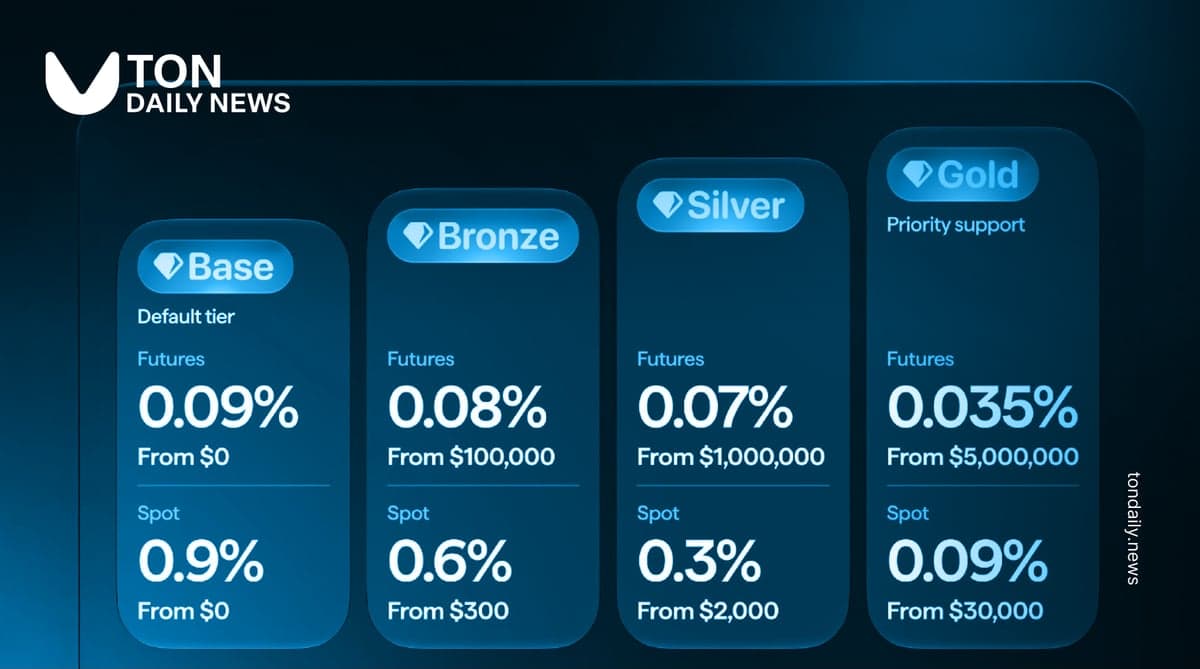
Walt has introduced a tier-based fee structure in which higher trading volume can unlock lower fees.
The platform's tier system applies across supported spot and perpetual futures trading.
As users reach the required volume thresholds, their tier can be upgraded automatically.
Higher tiers offer reduced trading fees, making transaction costs an important consideration for active traders.
Walt also clarifies that spot and perpetual futures volumes are assessed separately when determining eligibility.
Users can review their current tier and the volume required for the next level through Settings → Tiers.
7. Trading Activity Earns Points and Rewards
In addition to lower trading fees, Walt highlights a Points-based rewards system.
Users can earn Points through eligible asset trading and perpetual futures activity.
These Points can then be exchanged for available rewards through the platform.
This adds another component to the trading experience by connecting eligible platform activity with a rewards mechanism.
The exact earning rates, eligibility requirements and available rewards should be checked within the application, as these may be subject to platform rules.
Users should not increase trading activity or take unnecessary financial risks solely to earn Points.
8. Portfolio Analytics Help Investors Review Performance
Making investment decisions is only part of managing a portfolio.
Understanding how those decisions perform over time is equally important.
Walt highlights portfolio analytics as a way for users to review their investment strategies and examine their results.
AI agents can also help users explore portfolio information and assess their overall positions.
This creates a broader workflow in which users can:
Discover assets through market tools.
Research opportunities using AI assistance.
Build exposure through supported investment products.
Manage positions using available order types.
Monitor risk across perpetual futures.
Review portfolio performance and trading activity.
The combination of these features is intended to reduce the need to move between multiple applications for different investment tasks.
The Evolution of Crypto Wallets
The traditional cryptocurrency wallet primarily focused on storing digital assets, receiving funds and sending transactions.
However, the development of digital financial platforms is expanding what users can do within a single application.
The latest direction includes several connected services:
Feature | Purpose |
|---|
Market Heatmap | Visual overview of market movements |
Watchlist | Monitor selected assets |
AI Agents | Explore markets and assist with trading |
Tokenized Stocks and Funds | Access supported traditional-market exposure |
Limit Orders | Plan purchases at selected prices |
Take-Profit and Stop-Loss | Manage existing positions |
Perpetual Futures | Trade upward and downward price movements |
Trading Tiers | Access lower fees through qualifying volume |
Points and Rewards | Exchange eligible activity for rewards |
Portfolio Analytics | Review investment performance |
This reflects a broader shift toward applications that combine digital asset management, traditional financial exposure and active trading tools.
Conclusion
The cryptocurrency wallet is evolving into something more than a place to store digital assets.
With tokenized stocks and funds, perpetual futures, market heatmaps, AI agents, advanced order types and portfolio analytics, platforms are increasingly bringing multiple financial services together.
Walt's latest product direction demonstrates this shift by combining investment discovery, trading execution, position management and performance analysis within one application.
The broader development also highlights how artificial intelligence and tokenization are influencing the future of digital finance.
As these services continue to develop, the distinction between a traditional crypto wallet and an integrated investment platform may become increasingly less clear.