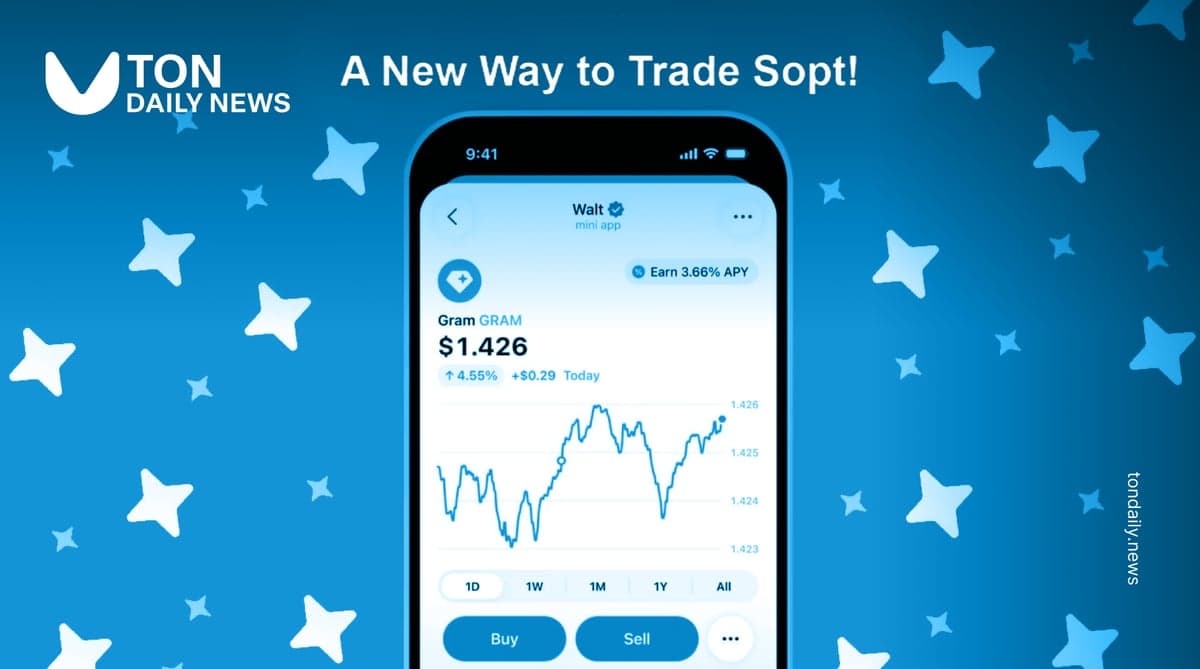
The release is part of Walt's ongoing effort to improve its trading experience through new tools, lower fees and AI-assisted functionality.
Walt Expands Trading With Four Order Types
Cryptocurrency markets operate around the clock, making it difficult for traders to monitor every price movement.
Prices can change significantly while users are working, sleeping or away from their devices.
Walt's latest update addresses this challenge by providing more flexible order execution options.
Users can now choose how and when supported trades should be executed.
The four available order types serve different purposes, from immediate transactions to automated price-based selling.
1. Market Orders: Buy or Sell Immediately
A Market Order is designed to execute a trade as soon as possible at the best available market prices.
This is the most straightforward order type for users who want to buy or sell an asset without waiting for a specific price.
For example, if Bitcoin is trading near $70,000, a trader placing a market buy order requests immediate execution against available sell orders.
However, the final execution price may differ from the price displayed when the order was submitted.
This difference, known as slippage, can occur during periods of volatility or limited liquidity.
Market orders prioritize execution speed rather than guaranteeing a particular price.
2. Limit Orders: Trade at a Selected Price
A Limit Order allows users to specify the price at which they are willing to buy or sell an asset.
Instead of executing immediately, the order remains pending until the specified price conditions can be satisfied.
For example, suppose a cryptocurrency is trading at $100.
A user who wants to buy at $95 can place a limit buy order at that price.
If the market reaches $95 and sufficient liquidity is available, the order may execute automatically.
This allows traders to plan entries without constantly checking the market.
However, limit orders do not guarantee execution. If the specified price is never reached, the order may remain unfilled.
Even when the market touches the selected price, execution can depend on available liquidity and order priority.
3. Take-Profit Orders: Set a Target Selling Price
A Take-Profit (TP) Order allows traders to establish a price at which they want an asset to be sold after a favorable market movement.
The purpose is to help capture gains when a predetermined target is reached.
For example, consider a trader who purchases a cryptocurrency at $100 and sets a take-profit target at $120.
If the market rises to the relevant trigger price, the take-profit instruction can activate according to the platform's execution rules.
This means the trader does not need to manually monitor the chart to initiate the planned exit.
Take-profit orders can be useful for traders who prefer predefined exit strategies.
However, the actual execution price and amount received depend on the order's structure, liquidity and market conditions.
A take-profit instruction does not guarantee a particular profit.
4. Stop-Loss Orders: Manage Downside Risk
A Stop-Loss (SL) Order is designed to initiate a sale when an asset reaches a predetermined downside price.
This allows users to define an exit condition intended to limit potential losses.
For example, suppose a trader buys an asset at $100 and sets a stop-loss level at $90.
If the relevant market price reaches the stop level, the order can trigger automatically.
The goal is to reduce the need for constant manual intervention during unfavorable price movements.
Stop-loss orders are widely used as part of trading risk-management strategies.
However, they cannot guarantee that an asset will be sold at the exact stop price.
Rapid market movements, price gaps and insufficient liquidity may result in execution at a less favorable price.
Comparing Walt's Four Trading Order Types
Order Type | Main Purpose | Execution Approach |
|---|
Market | Buy or sell promptly | Executes against available market liquidity |
Limit | Trade at a selected price or better | Executes only when price and liquidity conditions permit |
Take-Profit | Exit after a favorable price movement | Activates when the configured profit condition is met |
Stop-Loss | Reduce downside exposure | Activates when the configured loss condition is met |
Each order type serves a different trading objective.
Market orders emphasize speed, while limit orders emphasize price control.
Take-profit and stop-loss instructions help users establish exit conditions in advance.
Why Automated Trading Orders Matter
One of the challenges of cryptocurrency trading is the market's continuous operation.
Unlike traditional stock exchanges with regular trading sessions, cryptocurrency markets generally remain active 24 hours a day.
This creates opportunities but also makes constant monitoring impractical.
Conditional trading orders can help users plan transactions around specific price levels.
They may also reduce the need to react manually to every market movement.
However, automated execution should not be confused with guaranteed trading outcomes.
Orders can remain unfilled, execute at unexpected prices or be affected by market volatility.
How to Use the New Order Types on Walt
Walt says the new functionality is available through its trading interface.
Users can explore the available order types by following these steps:
Open Walt.
Select a supported cryptocurrency asset.
Navigate to the Trade section.
Choose the available order type.
Enter the relevant amount, price or trigger conditions.
Review the order details and confirm.
The exact fields and available options may vary depending on the selected asset and trading product.
Users should review the displayed instructions before submitting an order.
Fourth Walt Street Update Builds on Earlier Features
The latest release follows three previous announcements in Walt's five-part Walt Street series.
Earlier updates introduced improvements designed to make trading more convenient and accessible.
These included easier access to favorite assets, volume-based trading fee tiers and AI-assisted perpetual futures trading.
The fourth update focuses on order execution and risk-management functionality.
Together, these changes reflect Walt's effort to provide a more comprehensive trading experience through Telegram.
One additional Walt Street update remains to be announced.
The platform has not disclosed the contents of that final update in the supplied announcement.
Can Take-Profit and Stop-Loss Orders Replace Chart Monitoring?
Take-profit and stop-loss orders can reduce the need to watch charts continuously, but they do not eliminate the need for trading oversight.
Market conditions can change rapidly, and an order configured for one scenario may no longer match a user's trading strategy.
For example, unexpected volatility may trigger a stop-loss before the market reverses.
Similarly, a take-profit order may execute before an asset experiences a larger price increase.
Users should understand the limitations of each order type and periodically review open orders.
It is also important to verify whether the platform supports linked take-profit and stop-loss instructions, automatic cancellation of related orders or other advanced execution features.
Those details were not specified in Walt's announcement.
What the Update Means for Walt Users
The addition of multiple order types expands the range of trading strategies users can implement through Walt.
Instead of relying exclusively on immediate manual transactions, traders can establish predefined entry and exit conditions.
This can support more structured trading decisions and reduce the need for constant screen monitoring.
The update may be particularly relevant for users who follow several cryptocurrency assets simultaneously.
Nevertheless, successful trading still depends on market conditions, execution quality, risk management and individual decision-making.
Conclusion
Walt's fourth Walt Street update introduces Market, Limit, Take-Profit and Stop-Loss orders, giving users more flexibility when buying and selling cryptocurrencies.
The new functionality allows traders to execute immediate transactions, set preferred prices and establish automated exit conditions.
By reducing the need for continuous chart monitoring, the update aims to make cryptocurrency trading more convenient.
It also continues Walt's five-part product rollout, following earlier improvements to asset accessibility, trading fees and AI-assisted trading.
With one announcement remaining, attention now turns to the final Walt Street update.