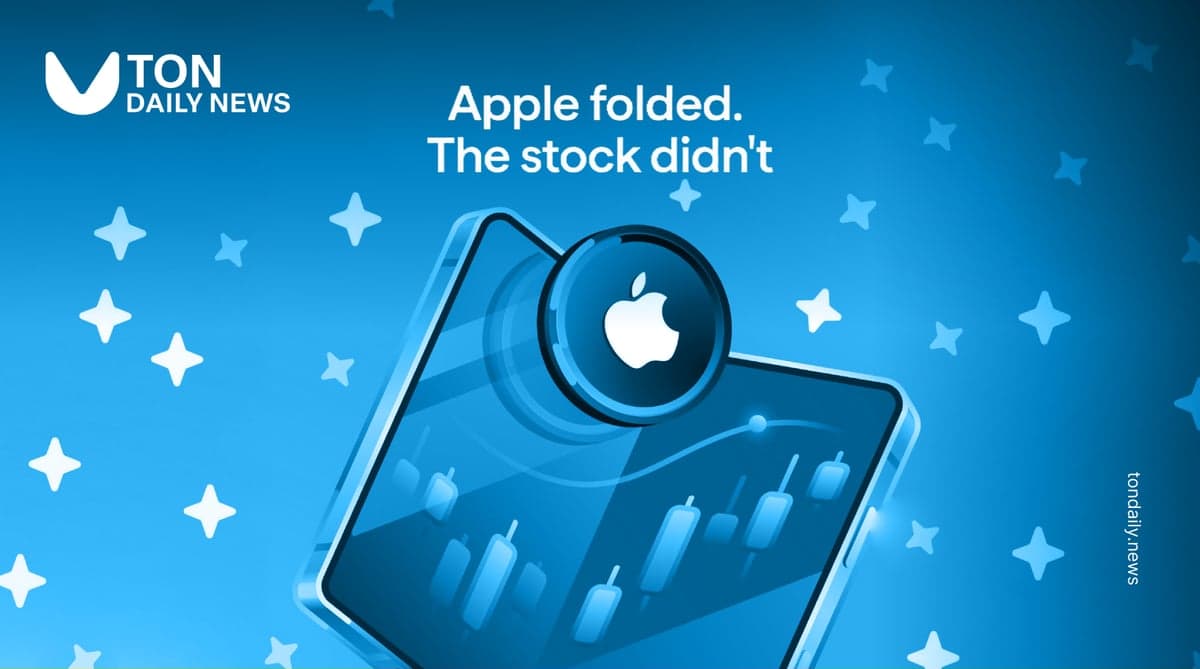
Apple has unveiled its first foldable smartphone, the iPhone Duo, introducing a new premium product category as tokenized versions of Apple stock provide another way for eligible users to gain price exposure to AAPL.
The iPhone Duo starts at $1,999 in the United States, with pre-orders opening October 16 and general availability beginning October 23.
The launch also highlights the growing overlap between traditional equities and blockchain markets, where products such as AAPLx are designed to track Apple's share price while trading as tokens.
Apple — iPhone Duo announcement
Apple's First Foldable iPhone Arrives October 23
Apple officially introduced the iPhone Duo on September 9, 2026, marking the company's entry into the foldable smartphone market.
The device features a 5.4-inch outer display and opens into a 7.6-inch internal Super Retina XDR display.
It is powered by Apple's A20 Pro chip and uses a titanium frame and hinge structure.
The iPhone Duo starts at $1,999 for 256GB of storage, with 512GB, 1TB and 2TB configurations also available.
Pre-orders begin on October 16, followed by availability across more than 70 countries and regions on October 23.
Apple — iPhone Duo specifications and availability
Apple Enters the Foldable Smartphone Market
The launch puts Apple directly into a premium foldable category already contested by companies including Samsung, Huawei and other smartphone manufacturers.
Unlike a conventional annual iPhone refresh, the Duo introduces an entirely new form factor to Apple's smartphone lineup.
When closed, the device operates as a compact smartphone. Opening it reveals the larger 7.6-inch display designed for multitasking, gaming and media.
The product's commercial performance after October 23 will provide an early indication of consumer demand for Apple's first foldable device.
Tokenized Apple Exposure Expands
The launch also comes as tokenized equities become increasingly visible across crypto markets.
Tokenized stocks are blockchain-based assets designed to provide economic exposure linked to traditional publicly traded companies.
Products such as AAPLx aim to track Apple's stock price while allowing eligible users to access that exposure through blockchain infrastructure.
According to Walt's promotional material, AAPLx can be purchased from $1 and traded around the clock.
Walt also says holders can receive additional tokens corresponding to Apple dividend distributions, proportional to their AAPLx holdings.
These are features described by the platform and should not be confused with directly owning Apple common stock.
Tokenized Stocks Are Not Apple Shares
That distinction is particularly important for investors.
Buying Apple stock through a conventional brokerage generally means acquiring shares representing ownership in Apple, subject to the structure and rules of the relevant market and account.
A tokenized product tracking AAPL is different.
Depending on its issuer and legal structure, a tokenized stock may provide economic exposure to the underlying share price without providing shareholder ownership or voting rights.
Availability can also vary substantially by jurisdiction.
Investors therefore need to understand the issuer, custody arrangement, redemption mechanism and regulatory structure behind a tokenized equity before using it.
Why Tokenized Stocks Are Growing
Tokenized equities attempt to combine characteristics of traditional financial markets with blockchain infrastructure.
One major difference is trading availability.
Traditional U.S. equity markets operate during defined trading sessions, although extended-hours trading has become increasingly available.
Blockchain-based markets can potentially operate 24 hours a day, seven days a week, depending on the platform.
Fractional access is another potential benefit.
Instead of purchasing an entire share, tokenized products can be divided into much smaller units, potentially lowering the minimum amount required to gain exposure.
That makes a comparison such as the $1,999 iPhone Duo versus AAPLx starting from $1 an effective illustration of fractional tokenized markets—even though purchasing the phone and gaining exposure to Apple stock are fundamentally different transactions.
Real-World Assets Move Onchain
Tokenized stocks form part of the broader real-world asset, or RWA, sector.
The idea is to represent economic claims connected to traditional assets using blockchain tokens.
The category increasingly includes:
Supporters see tokenization as a way to introduce programmable settlement, fractional ownership structures and around-the-clock transferability to financial markets.
However, regulatory restrictions, custody arrangements and investor protections remain important considerations.
October 23 Becomes the Next Apple Milestone
For Apple, attention now turns toward the iPhone Duo's commercial launch.
Pre-orders begin October 16, while devices are scheduled to reach customers beginning October 23.
Initial sales will provide the first concrete indication of demand for Apple's entry into foldable smartphones.
For tokenized-asset markets, meanwhile, products linked to companies such as Apple demonstrate how traditional equity exposure is increasingly being represented through blockchain infrastructure.
The two developments are separate, but they highlight an increasingly visible intersection between major technology companies and tokenized financial markets.
Bottom Line
Apple's first foldable smartphone, the iPhone Duo, starts at $1,999 and becomes available beginning October 23 after pre-orders open October 16.
At the same time, tokenized products such as AAPLx are offering eligible users blockchain-based exposure designed to track Apple's share price, with Walt advertising access starting from $1 and around-the-clock trading.
Tokenized AAPL products should not be confused with directly owning Apple shares. They can have different ownership rights, custody arrangements, availability and regulatory protections.
Still, their emergence illustrates a larger crypto-market trend: traditional financial assets are increasingly being represented and traded through blockchain infrastructure.