The TON ecosystem is expanding rapidly across decentralized finance, wallets, gaming, Jettons, NFTs and Telegram Mini Apps. As more applications move assets and user activity onchain, smart contract security has become an increasingly important part of launching a Web3 project.
A vulnerability in a smart contract can potentially lead to lost funds, unauthorized access, manipulated protocol logic or other serious consequences. For projects building on The Open Network, working with an experienced security company can help identify vulnerabilities before deployment and provide users and investors with greater confidence.
TON also has its own technical architecture and development environment, meaning blockchain auditing experience alone may not always be sufficient. Teams should look for security providers with experience relevant to TON, TVM, FunC, Tact and Telegram-integrated applications.
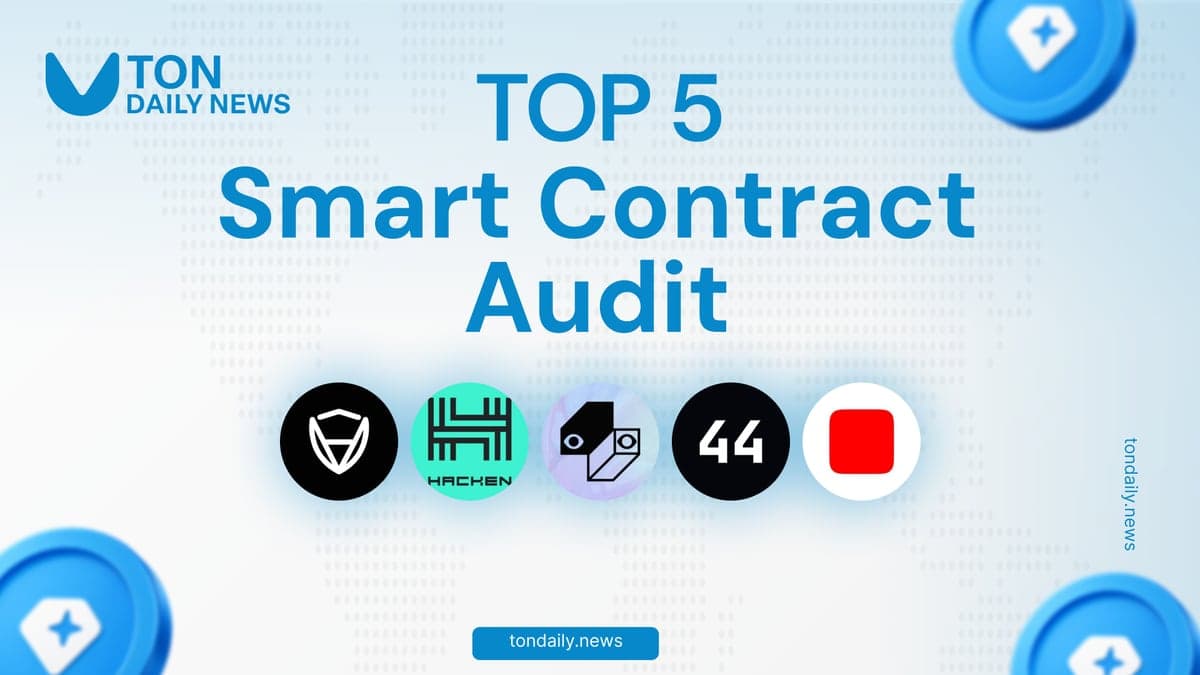
Here are five smart contract security companies and platforms worth considering for TON projects.
1. CertiK
CertiK is one of the most recognized blockchain security companies in the Web3 industry.
The company provides services including smart contract auditing, formal verification, penetration testing and continuous blockchain security monitoring.
CertiK also has a dedicated TON ecosystem security offering, combining security analysis, automated tooling, on-chain monitoring and formal verification capabilities.
Its audit methodology can combine automated analysis with manual code review to identify vulnerabilities that may not be detected through automated scanners alone.
Why consider CertiK for TON?
Dedicated TON ecosystem security coverage
Smart contract auditing
Manual and automated code analysis
Formal verification
On-chain security monitoring
Security rankings and public reports
Experience across multiple blockchain ecosystems
CertiK can be particularly relevant for larger TON protocols looking for a broader security program rather than a single pre-launch code review.
2. Hacken
Hacken is another established blockchain cybersecurity company with a dedicated TON smart contract auditing service.
Hacken's TON-focused approach is designed around TON's architecture and TVM environment. Its audit methodology can include documentation and scope analysis, manual code review, static and dynamic analysis, fuzzing, attack simulations and remediation verification.
The company also provides additional blockchain security services beyond traditional smart contract audits.
Why consider Hacken for TON?
Dedicated TON smart contract audit services
TON architecture and TVM expertise
Manual code review
Static and dynamic analysis
Fuzzing
Attack simulations
Remediation verification
Broader Web3 cybersecurity services
For TON teams that want an auditor with a clearly defined blockchain-security methodology and specific TON coverage, Hacken is an option worth evaluating.
3. HackenProof
HackenProof takes a somewhat different approach by combining professional security reviews with crowdsourced vulnerability research.
The platform offers curated security audits, bug bounty programs and its DualDefense approach, which combines expert-led auditing with security research from a broader community.
HackenProof has also operated security initiatives connected to the TON ecosystem, including programs covering websites, APIs, Telegram Mini Apps and applications interacting with TON infrastructure.
This can be useful for projects whose attack surface extends beyond their core smart contracts.
Why consider HackenProof for TON?
Crowdsourced security testing
Professional security audits
Bug bounty programs
DualDefense security model
TON ecosystem security programs
Telegram Mini App security coverage
Large security researcher community
For a TON project with a broad application stack, combining an initial audit with ongoing bug bounty testing can provide additional vulnerability coverage.
4. Config44
Config44 is a security-focused company positioned around detailed smart contract security reviews.
Its services focus on identifying vulnerabilities and weaknesses within Web3 smart contract implementations.
For TON teams, Config44 can be considered when a project requires a more focused smart contract security assessment.
However, teams should verify the auditor's current TON-specific experience before beginning an engagement, particularly when the project uses specialized FunC or Tact implementations or more complex TON architecture.
Why consider Config44?
Smart contract security auditing
Focused code review
Vulnerability identification
Web3 security assessments
Specialized security engagement options
As with any auditor, TON projects should confirm the exact scope, previous TON experience and testing methodology before selecting the provider.
5. Positive Web3 Security
Positive Web3 Security is a Web3 security company offering security research and assessment capabilities across blockchain ecosystems.
The company has demonstrated TON-specific security expertise through its PositiveCTF platform, which has included challenges covering TON smart contracts, contract logic and fuzzing.
Its published TON challenges have included areas such as token contracts, reward pools, controllers and other smart contract mechanisms.
This type of security research can be valuable because it demonstrates practical exposure to the types of vulnerabilities that can affect TON applications.
Why consider Positive Web3?
Web3 security expertise
TON-focused security research
Smart contract security testing
Fuzzing and vulnerability research
Experience across blockchain environments
Broader Web3 security capabilities
Projects with complex infrastructure may want to consider providers capable of examining both the smart contract layer and the broader application attack surface.
How to Choose a Smart Contract Auditor for TON
Selecting an auditor should not be based purely on reputation or the number of audits completed.
TON has its own architecture, virtual machine and development languages, so teams should determine whether an auditor has genuine experience working with the technology used by their project.
1. Check TON and TVM Experience
Ask whether the security team has previously audited TON smart contracts and TVM-based applications.
Understanding TON's architecture can be important when evaluating contract execution, message handling, state transitions and potential attack vectors.
2. Look for FunC and Tact Expertise
TON projects may use FunC, Tact or related development tooling.
An auditor familiar with these technologies is better positioned to identify language-specific issues and understand how the project's code interacts with the TON execution environment.
3. Prioritize Manual Code Review
Automated security scanners are useful for detecting known vulnerability patterns, but they cannot replace experienced manual analysis.
Business-logic vulnerabilities, authorization problems and unusual attack paths can require a human reviewer who understands the project's intended behavior.
4. Consider Fuzzing and Attack Simulation
A strong audit may include techniques such as:
These methods can expose unexpected contract behavior that may not be obvious from a conventional code review.
5. Ask About Remediation Reviews
The audit should ideally not end when the security report is delivered.
After vulnerabilities are fixed, the security provider should review the changes and confirm that the remediation addresses the original issue without introducing new problems.
6. Consider Continuous Security
For larger TON protocols, a one-time audit may not be enough.
Teams can also consider:
Security should continue after a protocol goes live.
Why Smart Contract Audits Matter for TON
The TON ecosystem has expanded far beyond simple token transfers.
The network now supports a growing range of applications across DeFi, gaming, wallets, Jettons, NFTs and Telegram Mini Apps.
TON official website
Telegram integration also gives TON applications access to a potentially massive user base. That creates significant opportunities for developers, but it also increases the importance of protecting users and their assets.
A smart contract vulnerability can potentially affect:
A professional audit can help identify vulnerabilities involving access controls, business logic, state management, message handling, dependencies and other security-critical components before a project reaches production.
However, an audit should never be treated as a guarantee that a protocol is completely secure.
Smart contracts can change after an audit, dependencies can introduce new risks and previously unknown vulnerabilities can emerge after deployment. Continuous monitoring and responsible disclosure therefore remain important.
TON Projects Should Use Multiple Layers of Security
For larger projects, security is better approached as a process rather than a single audit.
A project could begin with an internal code review, followed by an independent smart contract audit. After remediation, the team could add a second security review or audit from another provider.
Once the protocol goes live, a bug bounty and continuous monitoring program can help identify vulnerabilities that were not discovered during pre-launch testing.
This layered approach can be particularly valuable for TON DeFi protocols and Telegram Mini Apps that manage significant user assets or interact with multiple external contracts.
Final Thoughts
The rapid growth of TON makes smart contract security increasingly important for developers building the next generation of Telegram-connected Web3 applications.
CertiK and Hacken stand out for their dedicated TON security offerings, while HackenProof provides an additional crowdsourced security layer through audits and bug bounty programs. Config44 offers a focused smart contract auditing option, while Positive Web3 Security has demonstrated TON-specific expertise through its security research and challenge programs.
The right choice ultimately depends on the project's architecture, codebase, budget, launch timeline and security requirements.
Before deploying a TON smart contract to mainnet, teams should compare each provider's TON experience, audit scope, testing methodology, remediation process and post-launch security services.
A professional audit is not simply a box to check before launch. For serious TON projects, it should be one component of a broader security strategy designed to protect users, assets, liquidity and the long-term reputation of the protocol.