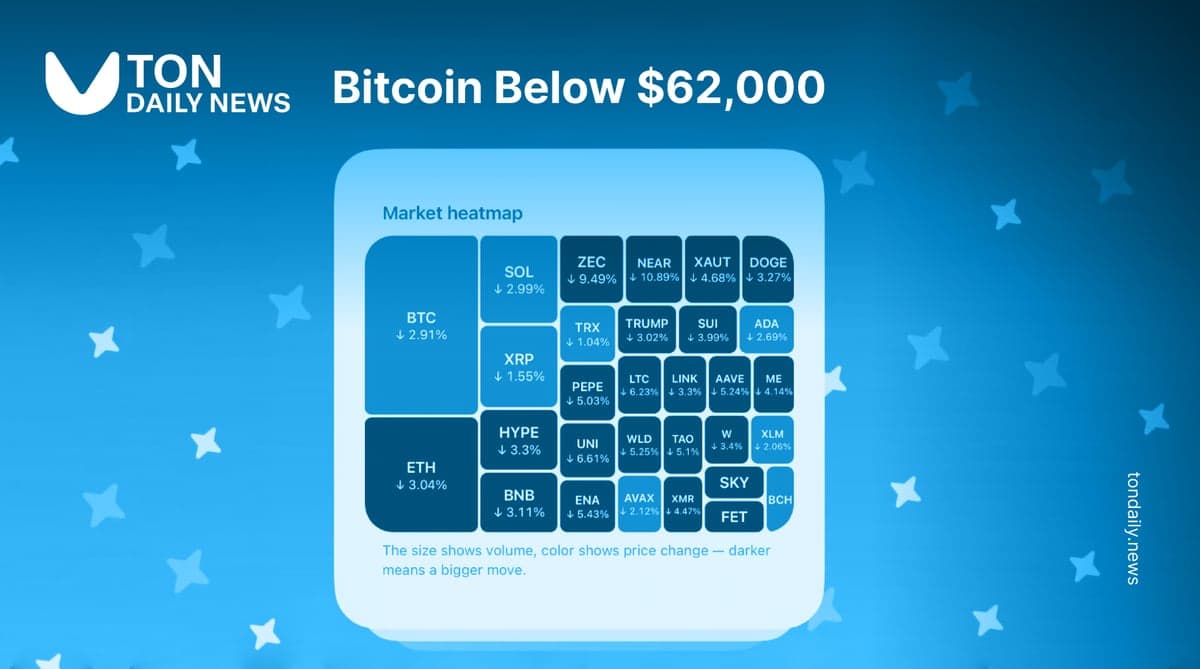
Bitcoin has fallen below $62,000, extending its recent decline as growing market uncertainty triggers widespread liquidations across the cryptocurrency market. BTC has lost nearly 3% over the past 24 hours, reaching its lowest price level since the summer.
The latest downturn has also pushed leveraged traders into difficult positions. Nearly $500 million worth of cryptocurrency positions have been liquidated over the same period, with long positions accounting for the majority of forced closures.
With Bitcoin approaching the psychologically important $60,000 level, traders are increasingly concerned that further downside could trigger another wave of selling.
Bitcoin Approaches $60,000 as Liquidations Increase
Bitcoin's decline toward $60,000 has brought an important support zone back into focus. The cryptocurrency last traded below this level in early July, making it a significant price area for market participants.
According to Glassnode, a substantial concentration of leveraged long positions sits between $59,500 and $62,200. If Bitcoin continues falling through this range, additional liquidations could accelerate selling pressure and increase short-term market volatility.
Forced liquidations occur when traders cannot maintain the required margin on leveraged positions. As prices decline, exchanges automatically close these positions, potentially adding further downward pressure to the market.
This creates a challenging environment for bullish traders, particularly if Bitcoin fails to recover the $62,000 level.
Stock Market Decline Adds Pressure to Bitcoin
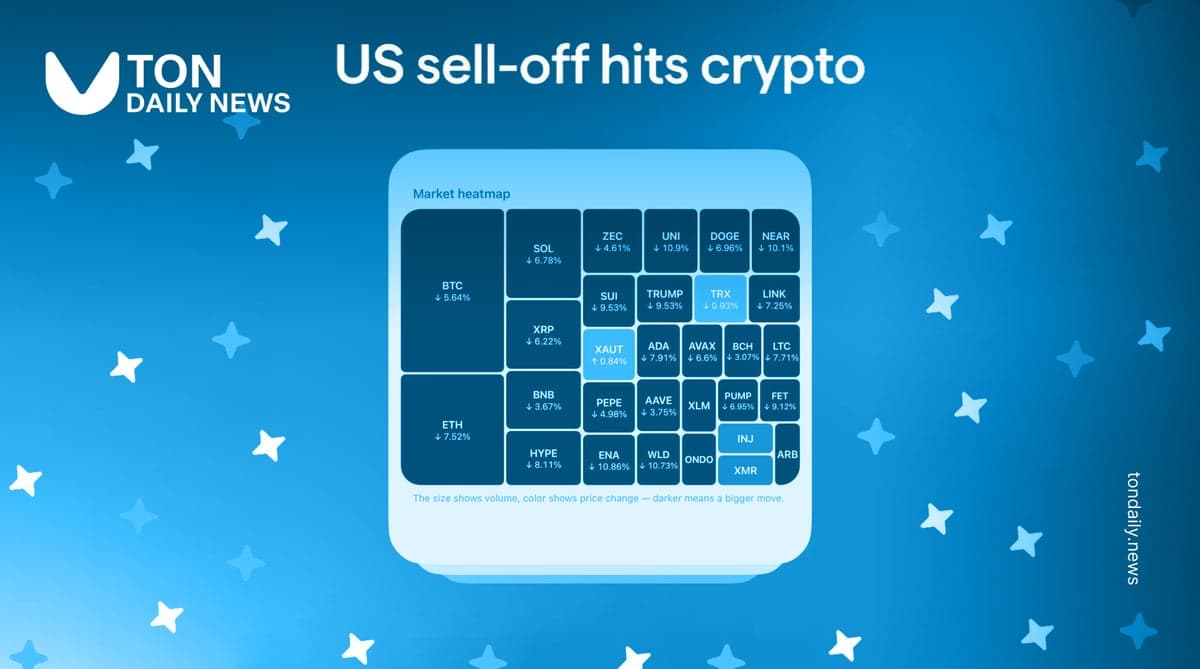
The weakness is not limited to cryptocurrencies. Traditional financial markets are also experiencing significant selling pressure, suggesting that broader economic uncertainty is contributing to the latest Bitcoin decline.
The S&P 500 has fallen approximately 5% since the beginning of the week and is heading toward its sixth consecutive losing session, marking its longest losing streak since April 2024.
Nvidia shares also declined by around 3%, despite the company reporting record revenue. Meanwhile, gold dropped below $3,550, reaching a 14-month low, while silver recorded losses of more than 13% during the week.
The simultaneous declines across stocks, cryptocurrencies, and precious metals indicate that investors are becoming more cautious about risk exposure.
December Fed Rate Hike Expectations Weigh on Risk Assets
One potential factor behind the market pressure is growing speculation that the US Federal Reserve could raise interest rates in December.
Market expectations have reportedly placed the probability of a December rate hike at approximately 90%. Higher interest rates can strengthen the US dollar and make traditional interest-bearing assets more attractive relative to riskier investments.
Bitcoin, stocks, and other risk-sensitive assets can face additional pressure in such an environment. Gold may also struggle because it does not generate interest income.
However, monetary policy expectations are only one possible contributor to the current market decline. Broader liquidity conditions, investor positioning, and market sentiment may also influence Bitcoin's next move.
Crypto Fear and Greed Index Falls Into Extreme Fear
Investor sentiment has deteriorated alongside the falling Bitcoin price.
The Crypto Fear and Greed Index has dropped below 10, entering the extreme fear zone. Such a reading reflects heightened uncertainty and a significant decline in market confidence.
Extreme fear can accompany periods of heavy selling and market stress. However, it does not necessarily indicate that Bitcoin has reached its bottom.
Traders will likely monitor the $60,000 level closely, along with liquidation activity and broader financial market movements, to assess whether the decline is likely to continue.
Will Bitcoin Break Below $60,000?
Bitcoin's next move could depend on whether buyers manage to defend the $60,000 region or whether continued selling pushes the cryptocurrency into a deeper correction.
A break below $60,000 could expose the market to additional liquidation pressure, particularly given the concentration of leveraged long positions around the current price zone.
On the other hand, a recovery above $62,000 could help ease immediate downside concerns and improve short-term sentiment.
For now, traders are facing a combination of falling equity markets, rising interest rate expectations, heavy liquidations, and extreme fear.
Rather than reacting emotionally to short-term price movements, investors may benefit from monitoring key support levels, market liquidity, and broader economic developments before making decisions.