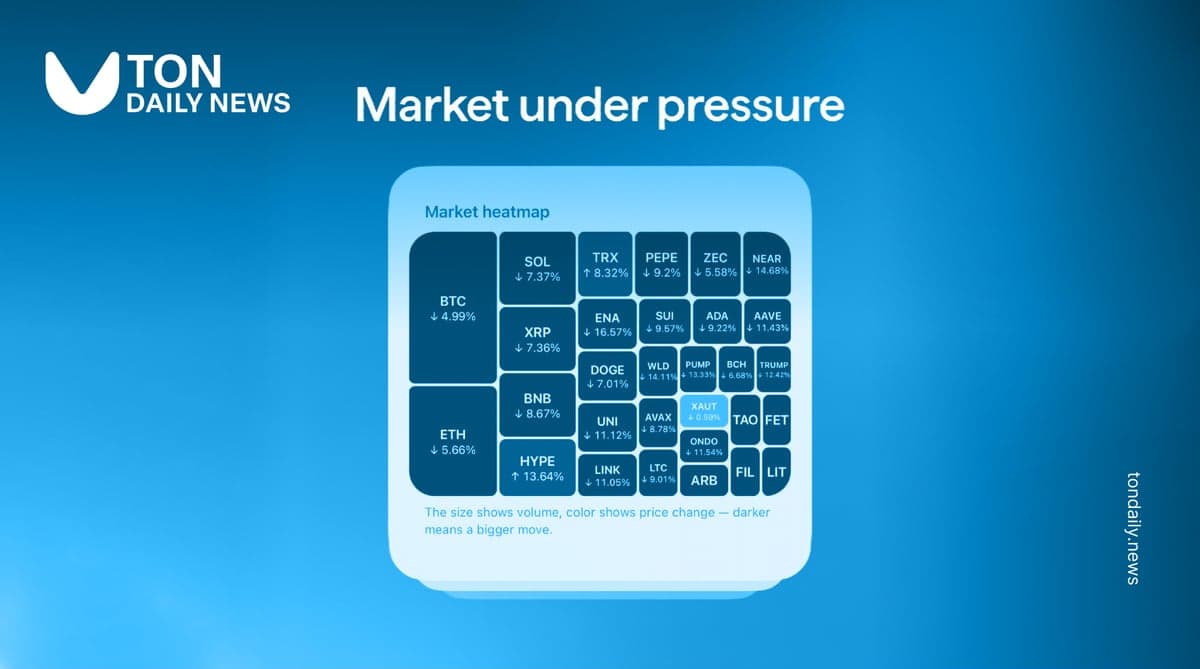
The news triggered widespread concern across the cryptocurrency market, contributing to selling pressure, increased volatility and substantial liquidations of leveraged positions.
Bitcoin briefly fell below $77,000 in some market reports, while Ethereum, BNB and several other major cryptocurrencies also recorded significant declines.
Binance maintains that user funds are safe and says it will cover losses using its Secure Asset Fund for Users (SAFU) and company funds.
What Happened at Binance?
According to Binance's official security update published on October 30, its preliminary investigation suggests that an attacker may have compromised a DevOps engineer's laptop.
The suspected attacker allegedly gained access to a service container and used that access to submit unauthorized withdrawal transactions.
Binance stated that its investigation had not identified evidence of leaked wallet private keys.
However, the exchange emphasized that its investigation remains ongoing and that a detailed technical report will be released once the findings are verified.
The estimated impact of approximately $6.3 billion makes the incident potentially one of the largest cryptocurrency security breaches ever reported.
The amount ultimately lost, recovered or reimbursed may change as the investigation progresses.
Binance Temporarily Suspends Deposits and Withdrawals
Following the incident, Binance implemented several precautionary security measures.
These included temporarily suspending deposits and withdrawals, revoking affected address authorization and working with law enforcement and blockchain intelligence companies.
The exchange said the restrictions were introduced to support security checks and prevent further unauthorized transactions.
Users should check Binance's official status updates for the latest information about deposit and withdrawal availability.
Binance has also committed to publishing an updated Proof of Reserves after remediation work is completed.
Tether and Circle Freeze Billions in Affected Assets
Stablecoin issuers have played an important role in responding to the incident.
According to reporting from Reuters, Tether froze approximately $1.57 billion in USDT, while Circle froze more than $800 million in USDC associated with the suspicious transactions.
Together, those actions accounted for more than $2.3 billion in affected stablecoins.
Binance subsequently reported that the total value frozen across affected assets had reached approximately $3 billion.
Freezing tokens can restrict the movement of certain assets, potentially supporting recovery efforts.
However, frozen funds are not necessarily the same as recovered funds, and the final outcome remains uncertain.
Bitcoin Drops Sharply as Crypto Market Reacts
The security incident coincided with a broad cryptocurrency market decline.
Bitcoin fell toward the $77,000 region and briefly traded below that level, according to market reports published on October 29 and 30.
Other major cryptocurrencies also came under pressure.
Cryptocurrency | Reported Market Reaction |
|---|
Bitcoin (BTC) | Briefly fell below $77,000 |
Ethereum (ETH) | Declined more than 5% in some reporting periods |
BNB | Fell around 7–8% or more |
XRP | Experienced significant selling pressure |
Figures reflect reported market movements during the incident, not continuously updated prices.
The decline reflects the market's sensitivity to security events involving major cryptocurrency infrastructure.
Exchange-related uncertainty can influence confidence across multiple assets, even when those assets are not directly involved in the incident.
Crypto Liquidations Add Pressure to the Sell-Off
Leveraged traders have been particularly exposed to the market's sudden volatility.
According to The Block, approximately $1.55 billion in cryptocurrency positions were liquidated over a 24-hour period, with long positions accounting for most of the reported liquidations.
Liquidations occur when leveraged positions no longer maintain the margin required by the trading platform.
During rapid price declines, long positions can be automatically closed, potentially adding further selling pressure.
This can create a feedback loop in which falling prices trigger liquidations, and liquidation activity contributes to additional volatility.
However, market movements cannot necessarily be attributed to a single event. Broader economic conditions, investor sentiment and existing leverage can also influence the scale of a sell-off.
Binance Says User Funds Are Safe
Despite the scale of the reported incident, Binance has repeatedly stated that user funds are safe.
The exchange says it will cover losses through its SAFU reserve and company resources.
Binance is also cooperating with law enforcement and blockchain partners to trace affected assets and investigate the attackers.
These assurances are important, but users should continue monitoring official announcements and subsequent reserve disclosures.
The final financial impact and recovery process have not yet been established.
What Should Crypto Traders Do During High Volatility?
Periods of market uncertainty can create substantial risks for both spot and derivatives traders.
Rapid price movements can lead to wider spreads, unexpected execution prices and significant losses for leveraged positions.
Traders should consider reviewing their open positions, available margin and exposure to sudden market movements.
Stop-loss orders can support risk management, but they do not guarantee execution at a specified price during volatile conditions.
Users should also avoid making decisions based on unverified social media reports.
Security incidents frequently attract phishing attempts, including fraudulent recovery services, fake customer support accounts and malicious wallet verification links.
Any communication requesting private keys, recovery phrases or unexpected transfers should be treated with extreme caution.
Can the Cryptocurrency Market Recover?
The cryptocurrency industry has experienced major security incidents in the past, including exchange breaches and losses involving decentralized finance protocols.
Markets have recovered from some previous shocks, although individual companies, investors and affected assets have not always recovered their losses.
The outcome of the Binance incident will depend on several factors, including the success of asset recovery efforts, the exchange's financial response and its ability to restore confidence.
For now, the full consequences remain uncertain.
It would be premature to assume that the market will recover within a specific timeframe or that further volatility has ended.
What Happens Next?
Several developments will be important to monitor over the coming days:
Binance's investigation findings and technical post-mortem.
Any additional freezing or recovery of affected assets.
Restoration of normal deposit and withdrawal operations.
Publication of Binance's updated Proof of Reserves.
Bitcoin and broader cryptocurrency market stability.
Changes in leveraged trading activity and liquidation pressure.
These updates should provide a clearer picture of the incident's operational and financial consequences.
Conclusion
The Binance security incident has become a major event for cryptocurrency markets, with approximately $6.3 billion in estimated impact and around $3 billion in affected assets frozen on-chain.
Bitcoin's decline toward $77,000, alongside broader losses and leveraged liquidations, illustrates how quickly uncertainty can spread through digital asset markets.
Binance says user funds remain safe and has committed to covering losses, while its investigation and recovery efforts continue.
For cryptocurrency users, the immediate priority is to rely on verified information, remain alert to scams and understand the risks of trading during unusually volatile conditions.
Market uncertainty can create pressure to react quickly, but informed decisions and appropriate risk management remain essential.