

NFTs on TON: How Telegram Is Powering the Shift to Utility-Driven NFTs
NFTs on TON Move Beyond Speculation
NFTs on The Open Network (TON) are undergoing a clear transformation. Once dominated by speculative trading and collectible hype, TON-based NFTs are increasingly being used as functional digital assets—enabling access, identity, and rewards across Telegram’s rapidly expanding ecosystem.
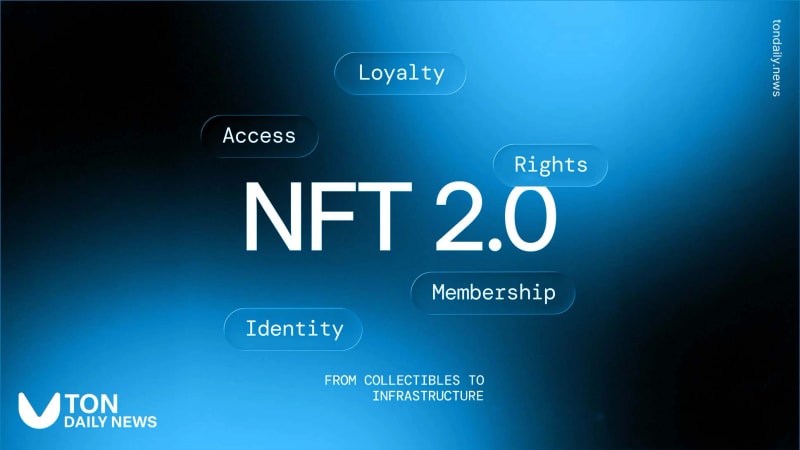
Early NFTs demonstrated the power of on-chain digital ownership but offered limited real-world utility. Since 2024, however, NFTs on TON have taken on new roles, serving as loyalty credentials, event tickets, participation badges, and membership proofs. This shift is now commonly described as the emergence of NFT 2.0 on TON.
Why TON Is Well Positioned for NFT Growth in 2025
TON’s infrastructure and close integration with Telegram give it structural advantages as NFTs evolve toward everyday use cases.
Key factors driving TON’s NFT momentum include:
- A scalable Layer-1 blockchain with low transaction fees
- Native integration with Telegram, enabling frictionless onboarding
- A growing ecosystem of Telegram-native NFT marketplaces, mini-apps, and wallets, including Tonkeeper and Wallet in Telegram
These features allow NFTs to function seamlessly within apps that users already engage with daily, reducing barriers that have historically limited NFT adoption.
NFT 2.0 on TON: Standards Built for Utility
TON’s transition toward utility-based NFTs is supported by a new generation of technical standards designed to handle real-world use cases.
Key TON NFT standards include:
- TEP-62 – Defines core NFT behavior
- TEP-64 – Establishes collection-level logic
- TEP-66 – Introduces standardized royalty mechanisms
Together, these standards ensure consistent behavior across platforms while protecting creator economics. Importantly, minting platforms and compatible wallets can flag royalty_violation events when royalty terms are bypassed—adding enforcement mechanisms that have been largely absent in earlier NFT ecosystems.
More detail on the evolution of these standards is available in TON’s official blog post:
NFTs as Portable Records Across Telegram Mini-Apps
Looking ahead to 2026, the TON Foundation is scaling infrastructure to support billions of NFT interactions, reflecting expectations that NFTs will operate less like collectibles and more like portable digital records.
In this model, a single NFT can represent:
- User rewards and achievements
- Access rights across multiple mini-apps
- Membership or subscription status
- Participation history within Telegram-native services
Because these NFTs are interoperable across the TON ecosysem, users can carry identity and reputation seamlessly between apps without re-registration or repeated verification.
A Broader Vision for NFTs Inside Telegram
TON’s approach suggests a future where NFTs operate quietly in the background—powering experiences rather than dominating headlines. By embedding NFTs into messaging, payments, and mini-app workflows, TON is positioning them as infrastructure-level primitives, not speculative instruments.
This evolution aligns with broader industry trends favoring practical, utility-driven Web3 adoption over hype cycles.
Explore the TON Ecosystem
Conclusion: TON’s NFT Strategy Focuses on Real Usage
NFTs on TON are no longer centered on speculation alone. By combining scalable infrastructure, Telegram-native distribution, and purpose-built standards, TON is redefining what NFTs can do—turning them into practical tools for access, identity, and rewards.
As Telegram’s ecosystem continues to grow, TON’s NFT 2.0 model may offer a blueprint for how NFTs achieve mainstream relevance.
Disclaimer: The content on this website is for informational purposes only and does not constitute financial or investment advice. We do not endorse any project or product. Readers should conduct their own research and assume full responsibility for their decisions. We are not liable for any loss or damage arising from reliance on the information provided. Crypto investments carry risks.